
A story by Brad Fisher
Caterpillar
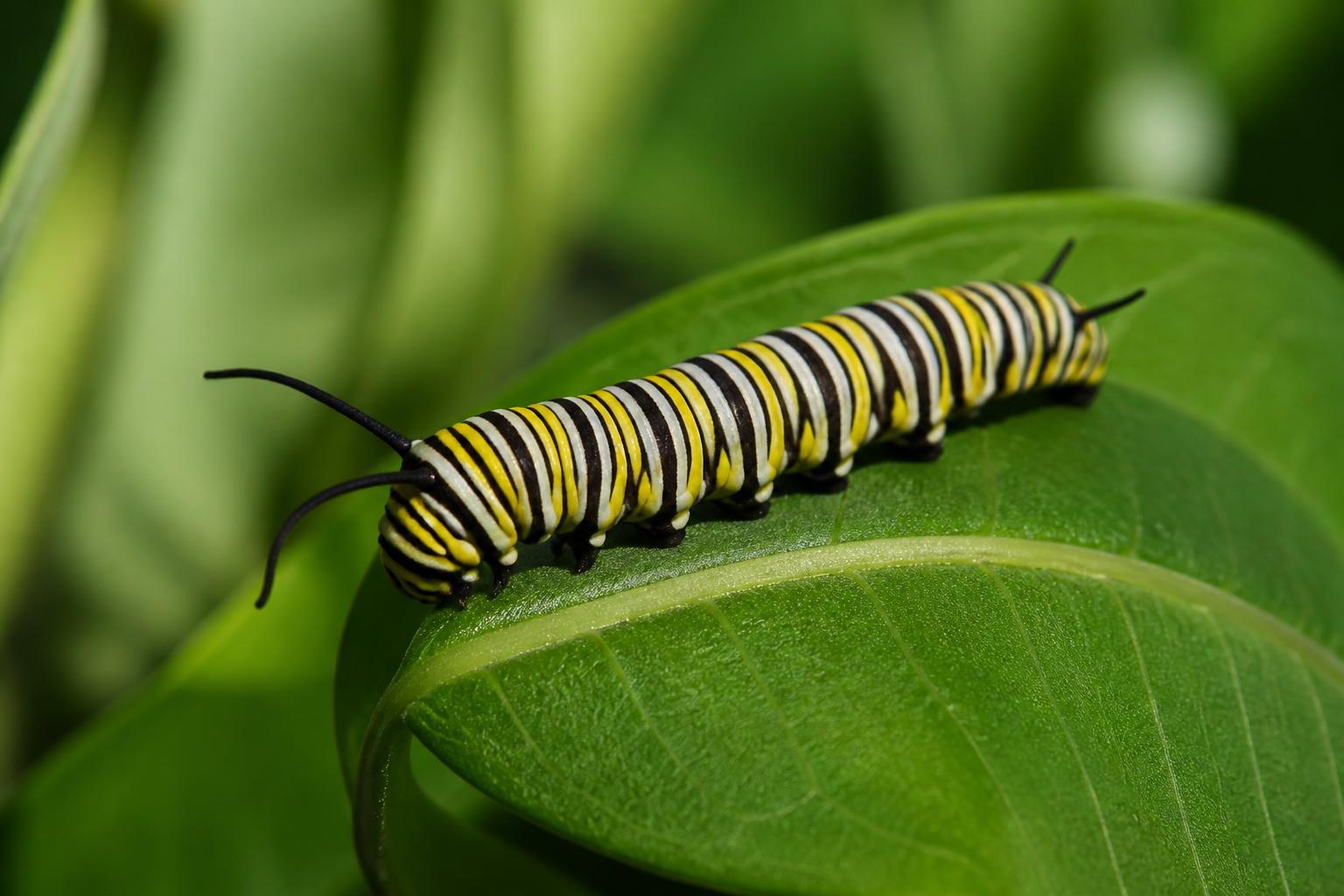
Imagine a caterpillar, smooth skin with bright alternating bands of yellow, black, and white. He’s physically fit and moving at the height of his power. Nearly two inches long, he’s crawling across your yard. He’s a handsome fellow, and he’s grown a lot over the past week or so since he hatched. Thanks to his milkweed diet, our little friend is smart, energetic, and strong. His muscles harmoniously contract and release his body segments, which coordinates his true legs and his prolegs so he can locomote across or between each blade of grass.
Your yard is wide, at least from a caterpillar’s perspective. Goodness knows what compelled him to take this trip today, but he regrets it now. He was safe and snug in your bushes by the garage. However, at this moment, after all this work, he’s only traversed about nine feet across the forty-six-foot expanse, and it has just occurred to him that he’s in trouble. Big trouble.
There are three robins lurking in the trees, and there’s a fourth one hopping up the slope twenty feet away, head snicking from side to side.
Most birds avoid monarch caterpillars because of the toxic substances (cardiac glycosides) they absorb from milkweed, but this robin is young and extra hungry, which is unfortunate for our ambitious hero.
The caterpillar picks up his pace. He’s starting to breathe harder…
Our little friend is out in the open, fully exposed. So, what does he do? The poor bugger crawls faster, and faster, and faster. His body ripples up and down with each effort. He makes good progress for a caterpillar, but eventually he hits his limit. No matter how hard he tries, he can’t move fast enough.
He is exhausted, then spent.
Act II — The Trap
This is a structural problem. As a caterpillar tucked under a leaf by your garage, he was fine. But his desire to do more compelled him into an untenable position. All he can do now is keep slogging, tired and afraid. No end in sight.
This is a structural problem.
Chances are, he’s going to be lunch, and deep down, he knows it.
Sound familiar?
Act III — The Transformation
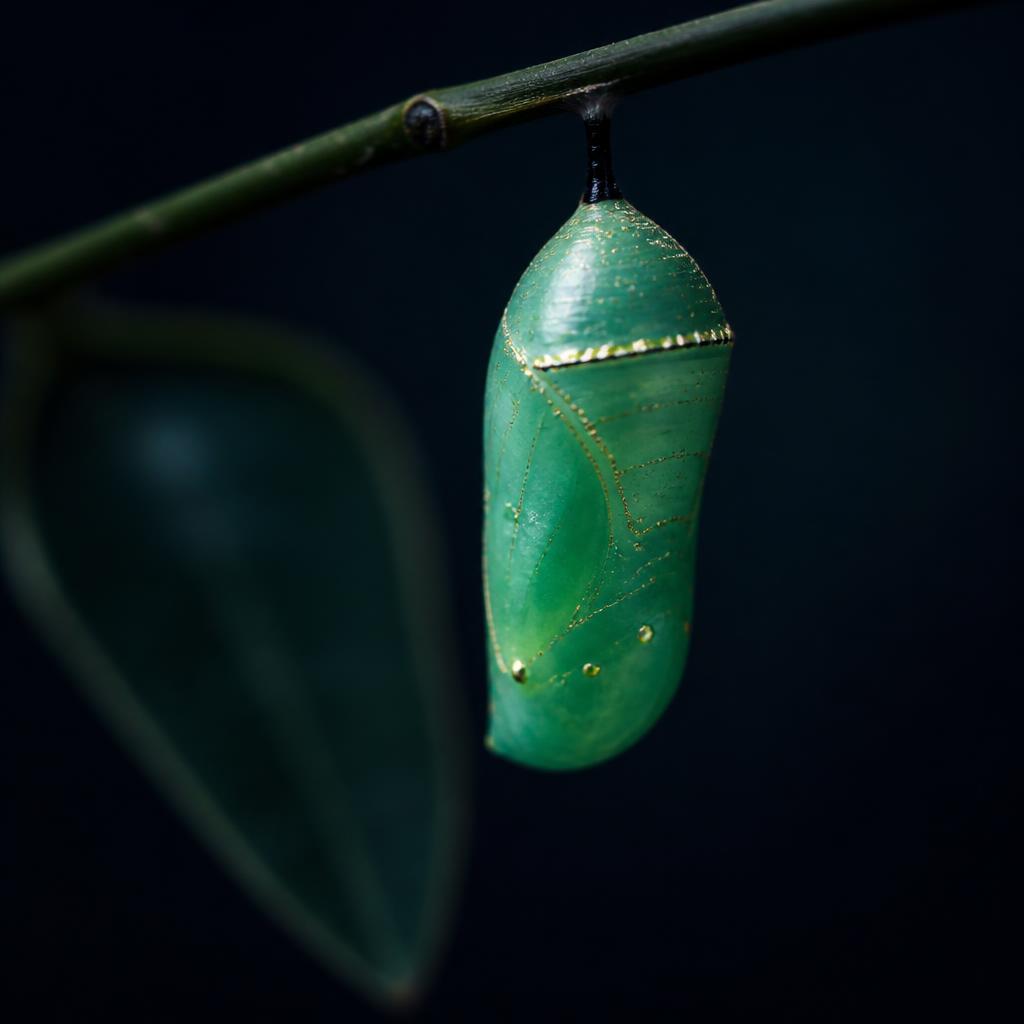
Now consider our caterpillar’s second cousin, several times removed. She hatched a few weeks ago under the same bush. Rather than striking out across your yard in her Stage One caterpillar body, however, this clever creature spun a cocoon and transformed into a butterfly before attempting to cross. She drifted safely to the other side of your yard in about six seconds.
A future butterfly was there inside our caterpillar too, a scalable Stage Two structure, ready to emerge.
Too bad he didn’t take The Second Leap.
Stage One
The caterpillar
Crawls. Works harder. Hits his limit — nine feet across a forty-six-foot yard, exposed and exhausted.
Stage Two
The butterfly
Flies. Crosses the whole yard in six seconds — and could migrate three thousand miles.
Our caterpillar, and the butterfly he could have been, are technically the same creature; they would have shared the same DNA, the same brainstem, the same hemolymph (insect blood). All that was required was transformation.

Act IV — The Point
As with the butterfly and the caterpillar, your Stage One Company and its Stage Two counterpart share the same DNA — the same Mission, core values, target customers, and long-term vision. They are the same creature, in a sense. The difference is structural, and what a difference it is!
This metaphor speaks directly to The Second Leap, and to our work. So many people are content to incrementally improve, to metaphorically build faster caterpillars, and that’s fine. They’re not ready for this work. But you and me? We are hungry for more.
We are here to help make butterflies, not faster caterpillars.
The faster caterpillar
Twice as fast, ten times as fast — and he’d still have been robin food.
The transformed butterfly
Migrated all the way to South America, three-thousand miles away. Imagine the sights he would have seen.
Transformation is priceless, and it’s easier than you think.
Ready to stop crawling?
Take The Second Leap. Book a conversation with Brad and start building your Stage Two structure.